Welcome to the School of Biological Sciences

School of Biological Sciences

School of Biological Sciences Seminars

May 2 at 4:00 – 5:00 in Schroeder 242 Dr Lingjun Li of Univ. of WI

Lingjun LiToward Functional Discovery of Neuropeptides by Mass Spectrometry-based Comparative Peptidomic Strategies

All nervous systems employ a large number of amines, amino acids and neuropeptides as neurotransmitters and neuromodulators. Using a highly sensitive mass spectrometry (MS)-based peptide profiling and de novo sequencing strategy, more than 200 neuropeptides have been discovered in a well-defined crustacean nervous system, revealing that even a relatively simple neural network contains an unexpectedly-rich diversity of neuropeptides.  To further explore the function of these neuropeptides, an affinity enhanced in vivo microdialysis sampling technique that utilize antibody-linked magnetic nanoparticles is explored to improve peptide recovery from extracellular fluids, thus enabling LC-MS monitoring of neuropeptide secretion during behavior.  Moreover, mass spectrometric imaging technology has been developed and implemented to follow neuropeptide spatial distribution with unprecedented details.  Furthermore, binary isotopic labeling technique based on formaldehyde labeling and a multiplexed set of isobaric labeling reagents based on dimethylated amino acids have been developed and employed to produce differential display of neuropeptidomes under different physiological conditions.  Examples of neuropeptide regulation of feeding behavior and neural network development will be highlighted in this presentation.  Collectively, these combined peptidomic and physiological studies will help to elucidate the functional roles that neuropeptides play in regulating neural network plasticity.

April 18 at 4:00 – 5:00 in Schroeder 242 Dr. Aurelio Galli, Vanderbilt Univ

Aurelio GalliiLocation, Location, Location: the key regulation of dopamine homeostasis and amphetamine actions

Dopamine acts in brain to modulate behaviors including motor activity, attention, and reward.  Disrupted dopamine signaling is implicated in brain disorders such as Parkinson’s disease, attention-deficit hyperactivity disorder, and psychostimulant abuse.  The implications of dysregulated dopamine signaling in these diseases have fueled research into the mechanisms by which dopamine signaling is controlled and integrated.

Psychostimulant (i.e. amphetamine) abuse has been associated with disrupted dopamine signaling and homeostasis mediated, at least in part, by altered dopamine clearance.  These findings underscore the coordinated nature of DA homeostasis that, once perturbed, may lead to multiple neuropsychiatric disorders, including addiction.

The long-term goals of my research are to understand how amphetamine-induced dopamine efflux and its associated behaviors are dictated by the interactions of dopamine transporter N-terminus with the plasma membrane, and/or by phosphorylation of the N-terminus. By specifically impairing dopamine efflux, but not uptake, we will determine the contribution of dopamine efflux in amphetamine behaviors. The intent of my lab is to uncover novel targets for the treatment of amphetamine abuse. From a broad perspective of transporter biology, we want to reveal how a dopamine transporter structural domain (the N-terminus) via its interactions with the plasma membrane dictates different aspects of transport function.


Full School of Biological Sciences Seminar Schedule (doc)

Seminars Archive

Behavior, Ecology, Evolution and Systematics Seminar Series

April 30 at noon in 121SLB Chris Loebach

Chris LInvestigating seed dispersal of garlic mustard (Alliaria petiolata)

April 23 at noon in 121SLB Meghan Strange

StrangeM 2011 Vermont  smallPlasma corticosterone and fitness-related traits in nestlings house wrens (Troglodytes aedon)

Full BEES Seminar Schedule

BEES Seminar Archive

Molecular and Cellular Biology Seminar Series

Join us in Fall of 2013 for the MCB Seminar Series

MCBlogo2sm-cropOur seminar series in molecular and cellular biology is a series of research presentations by graduate students, post-doc and faculty. Please join us in the fall when our series continues.

Nov 26 at noon in 121 Sirisha Sirobhushanam and Suranjana Sen of the Wilkinson Lab

Sirisha’s Characterization of Butyrante kinase in Listera monmcytogenes

Suranjana’s Effect of C6 branched-chain carboxylic acids on growth and membrane properties in a Listeria Branched-chain alpha-keto acid dehydrogenase mutant

Full Molecular and Cellular Seminar Schedule (pdf)

Molecular and Cellular Seminar Archive

Neuroscience Seminar Series

Join us in Fall of 2013 for Neuroscience Seminar

neurpicOur seminar series in neuroscience is a series of research presentations by graduate students, post-doc and faculty. Please join us in the fall when our series continues.

Dec 7 at noon in 105 FHS Carola Staedele

Multi-neuronal innervation of a muscle by several neurons of the same type

Full Neuroscience Seminar Schedule (pdf)

Neuroscience Seminar Archive

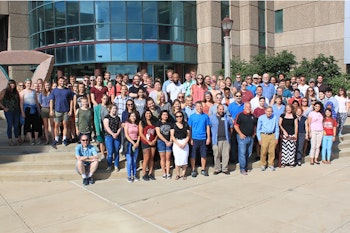
Welcome to the School of Biological Sciences

Craig Gatto, School Director

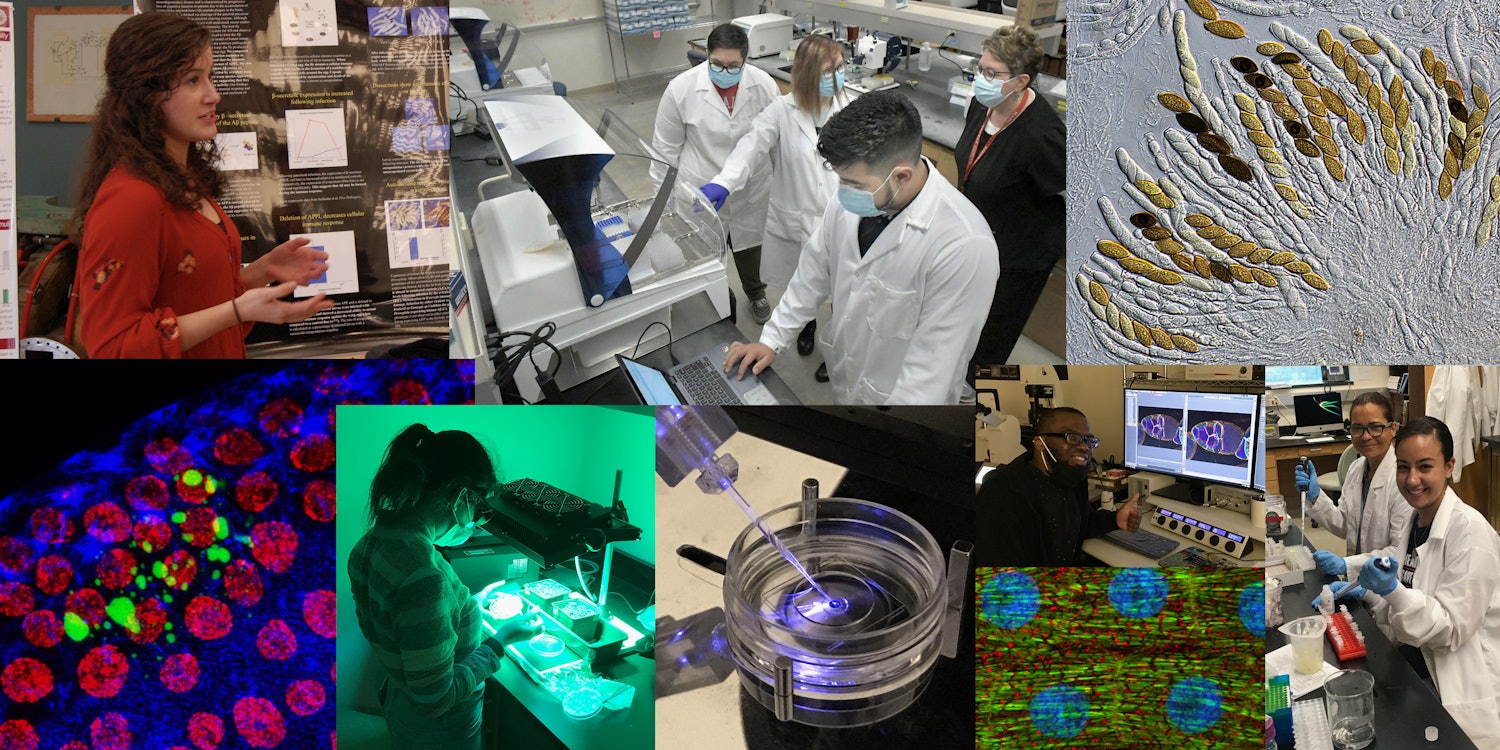
Whether you are interested in plants, animals, or microbes, our interdisciplinary and collaborative research groups in the School of Biological Sciences have something for you! From investigations involving interactions at subcellular molecular levels, to function and communication within/between organ systems and organisms, to evolutionary and ecological dynamics of populations, communities and ecosystems, see how ISU can set you on the right career path!

Biology News

Phi Sigma Symposium – Awards

Geoff OwerThe winners for the best posters are: First Yolanda Braun; Second Geoff Ower; Third Christine Hodges. The winners for the best oral presentations are: First Jen Breaux; Second (tie) Brian Grebliunas and Keith Bowers.


Join the BSSA Club for Undergraduates

We are an organization committed to enhancing your biological experience here at ISU. From field trips and community service to special events, we aim to provide for many different interests.  Please join us at our meetings to learn more about our club!  Please email  Megan Lawler (President) at mllawle@ilstu.edu with any questions!  We look forward to meeting you!


Archive


Biology from CASNews

CAS Staff Win Distinguished Service Awards
Barbara Cox and Mark Vegter

Barbara L. Cox and Mark Vegter

Barbara L. Cox and Mark Vegter received Distinguished Service Awards at the 2013 Founder’s Day Convocation. Cox’s award was bestowed by the Civil Service Council, while Vegter’s award was presented by Illinois State’s A/P (Academic/Professional) Council. Both awards are intended to encourage professional development and improve morale by honoring sustained contributions made by selected individuals and are the highest non-faculty awards given by the University.

Cox, Office Manager in the School of Biological Sciences, graduated with a B.S. in Business Administration and a B.S. in Human Resource Management. She was nominated for the award because of her exemplary job performance, campus involvement, and community service. Her bright demeanor serves to make the School Office both efficient and welcoming. She is well-liked by the faculty, students, and staff, who know her as reliable, hardworking, and cheerful. Cox also loves to serve her ISU family and the Bloomington-Normal community through volunteer service at events such as the We Care Twin Cities Half Marathon, Back to School Supply Drive, and Humane Society fundraisers.

Vegter, Assistant to the Chair and Academic Advisor in the Department of English, earned his B.S. in English at Illinois State University with a minor in writing. He has been an Academic Advisor at Illinois State for over 19 years. As part of the 2011 Annual Awards Program for Academic Advising, he won an advising award from the National Academic Advising Association (NACADA). In addition to his awards in Diversity, Golden Key and Faculty Appreciation, he is the 2009 recipient of the Herb Sanders Award for Outstanding Academic Advising. He is also the former chair of the Academic Advisor Advisory Council of Illinois State University. He is currently teaching ENG 102.0, Introduction to English Studies Proseminar and will complete a Master of Science in Academic Advising in the summer of 2014.

Hanken to Give Talk on Biodiversity Science
James Hanken

James Hanken
Photo: Harvard University Center for the Environment

Comparative biology is more productive today than ever before with the rate of new species discovery higher than it’s ever been. Yet, at the same time, the rate of species extinction is increasing dramatically due to human-mediated environmental degradation on a global scale.

Harvard University Professor James Hanken will give a talk titled “Biodiversity Science 2013: Crisis and Opportunity” at 7 p.m. Thursday, April 4, in the Prairie Room of the Bone Student Center at Illinois State University.

Hanken will address the crisis for the future of biological diversity and the increasing focus both on the inventory and conservation of species and their habitats and on the major drivers of extinction.

The event, sponsored by the School of Biological Sciences, is free and open to the public, and is part of the R. Omar and Evelyn Rilett Family Life Sciences Lecture Series.

The curator in herpetology and director of the Museum of Comparative Zoology at Harvard University, Hanken holds the title of Alexander Agassiz Professor of Zoology at Harvard, where he studies the evolution of morphology and developmental biology.

His extensive research has been honored with numerous grants and fellowships from the National Science Foundation, the National Oceanographic and Atmospheric Administration, John D. and Catherine T. MacArthur Foundation, the National Institutes of Health, the Alfred P. Sloan Foundation and the Institute of Museum and Library Studies. Hanken is a fellow of the American Association for the Advancement of Science.

Along with his works appearing in scholarly journals, Hanken has edited publications such as the Journal of Morphology, Zoological Science, Evolution and Development and the Journal of Experimental Zoology: Molecular and Developmental Evolution.

The R. Omar and Evelyn Rilett Family Life Sciences Lecture Series was established in April 2007. It recognizes Rilett’s vision and leadership, which built a Department of Biological Sciences at Illinois State University that advanced education in the natural sciences, fostered scholarly endeavors and nurtured the development of research to the benefit of all who chose to teach and learn at this institution. The purpose is to bring outstanding life scientists and lectures to Illinois State University to benefit academic and local communities.

For additional information, contact the School of Biological Sciences at (309) 438-3664.

Archive